

The Week in the Markets
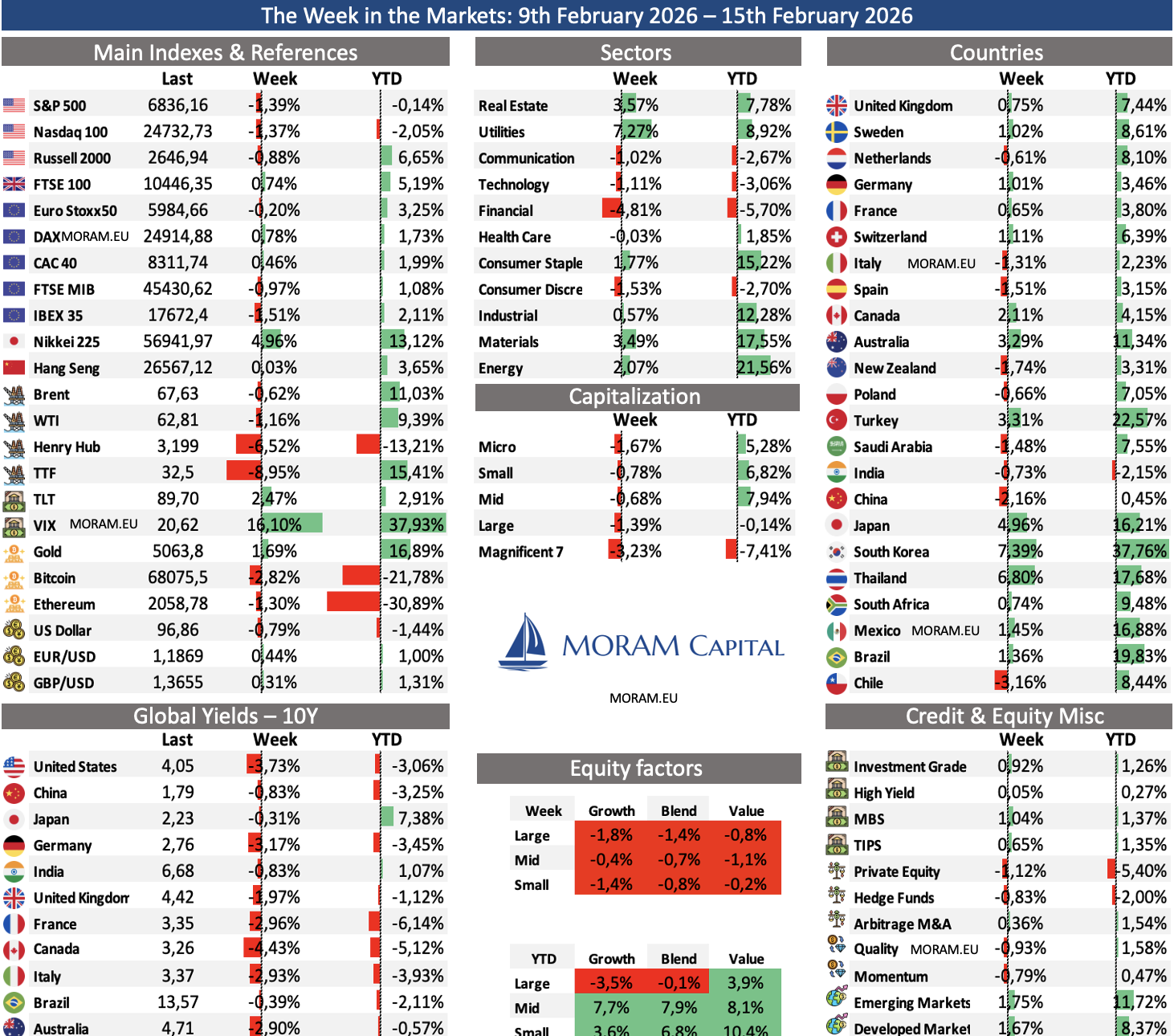
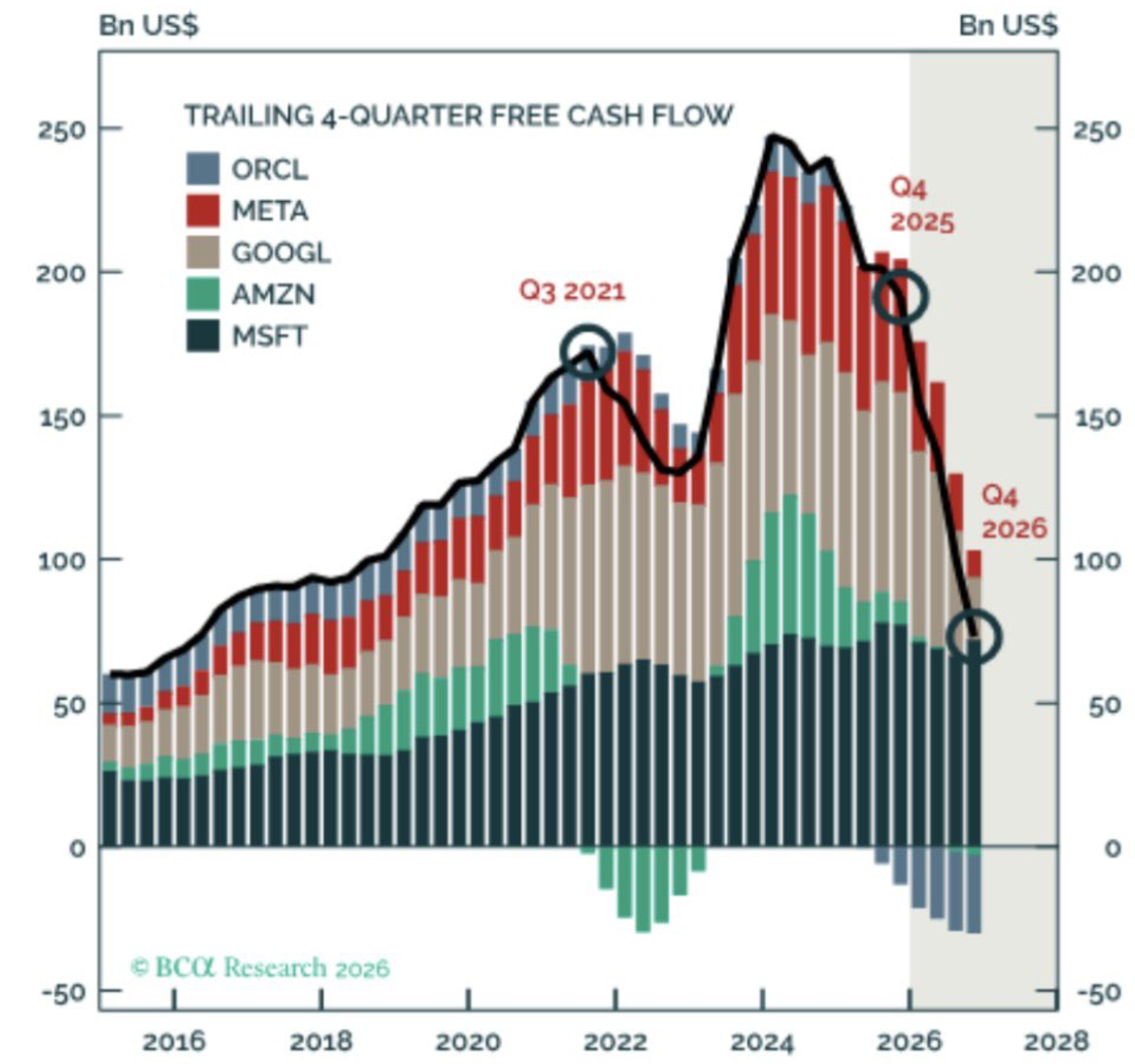
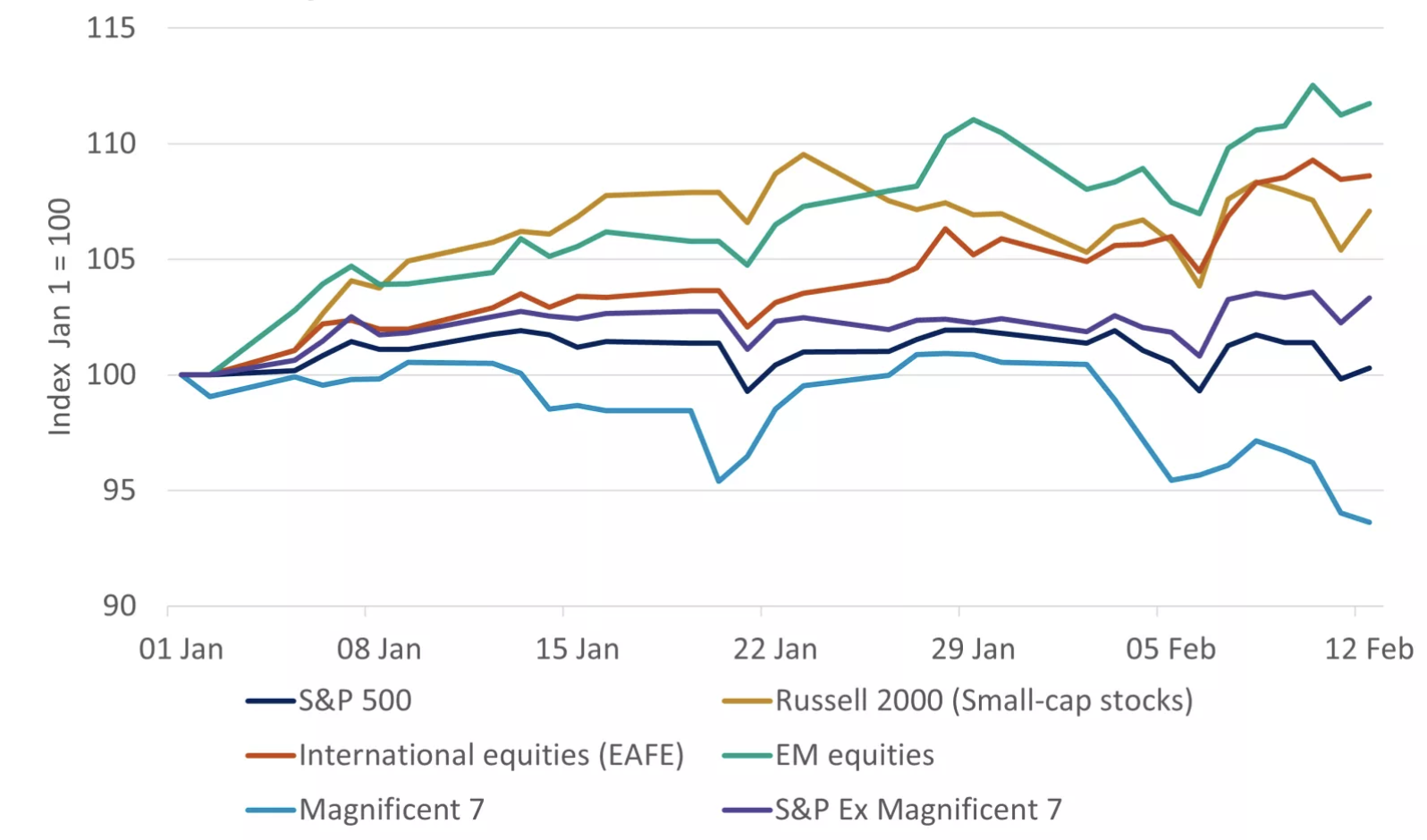
Last week turned risk-off across major indices, with both the U.S. and Europe closing in negative territory. The pressure was particularly visible in Financials – which is increasingly perceived as exposed to AI-driven disruption – and the Magnificent 7 due to the sheer scale of capital expenditure required to sustain the AI race
Source: Bloomberg
The fear index (VIX) spiked again, ending the week above 20, while gold finished higher once more, holding above $5,000/oz. If there is one defining feature of this start to the year, it is the pronounced rotation taking place across markets.
Capital is flowing out of industries seen as easily disrupted by AI or trading at extremely elevated multiples, and moving back into hard assets – Energy, Materials, Industrials – as well as emerging markets, which have historically performed well in this type of environment.
Source: Bloomberg & Edward Jones
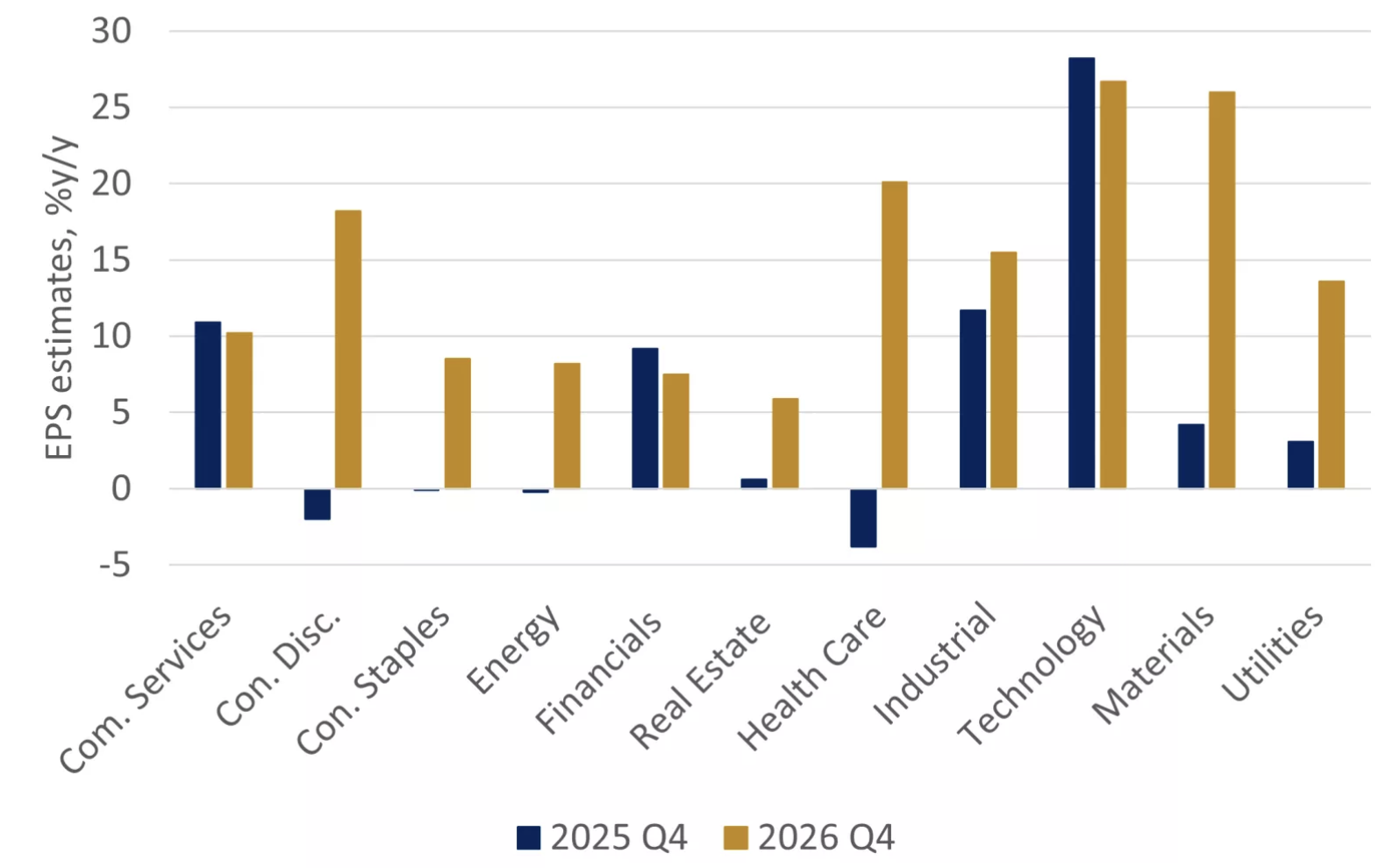
In fact, despite the expectation that growth will continue in 2026 – given the current environment of tax cuts, lower interest rates, and solid growth, as we are seeing in these first months of the year – when it comes to sector rotation, we are seeing that analysts’ expectations for energy, materials, consumer discretionary, consumer staples, healthcare, and others have surged. This also helps explain the rotation we have been observing in these first weeks of the year.
Source: Bloomberg
On the macro level, the week was packed with key releases covering household consumption, labor market dynamics, and inflation. While the data were not uniformly strong, taken together they continue to point to gradually improving economic fundamentals, keeping the Federal Reserve broadly on track for potential rate cuts later this year.
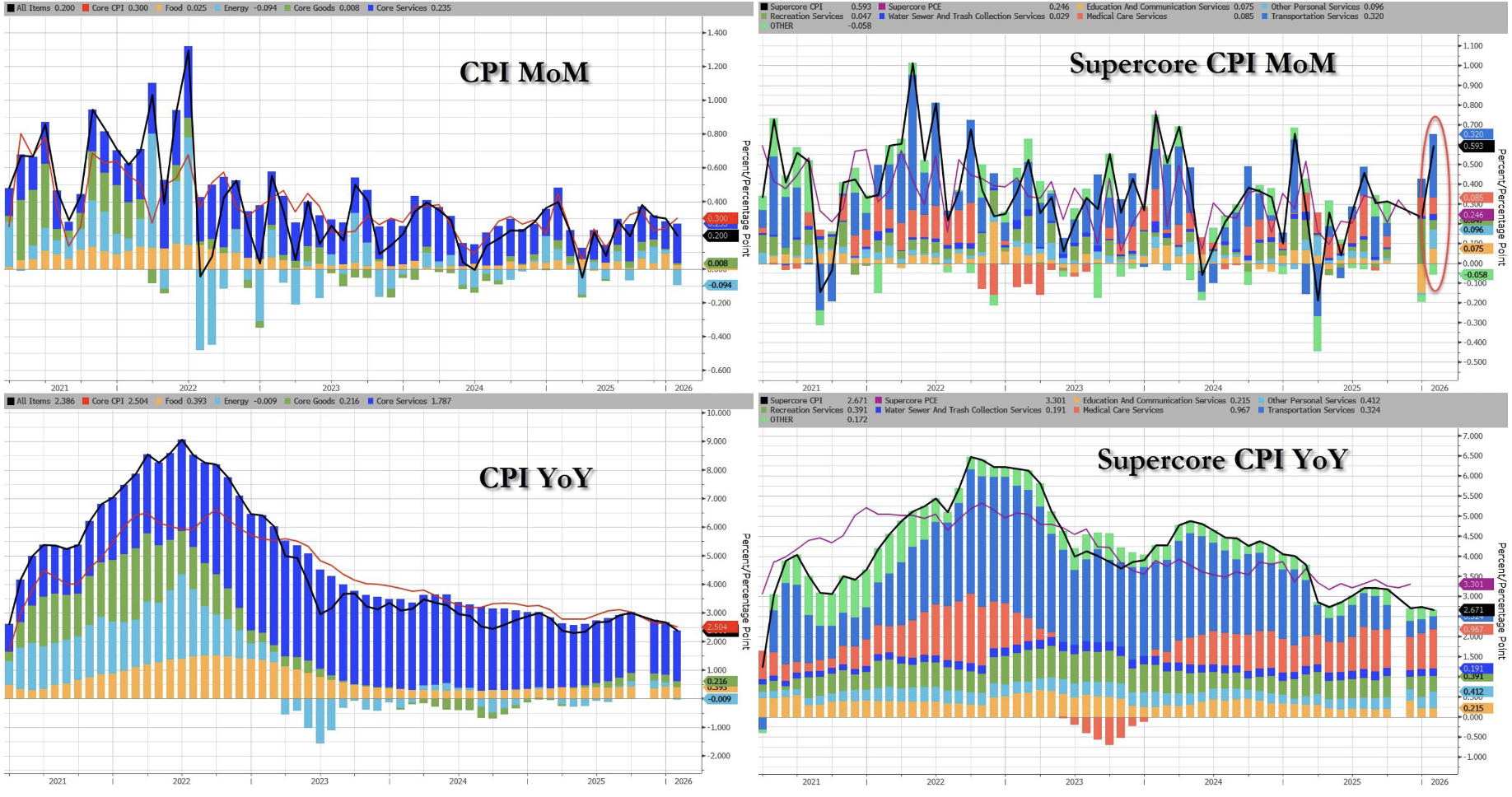
Source: ZeroHedge
As for inflation in January, it came in softer than expected, reinforcing the ongoing disinflation trend.
- Headline CPI rose 0.17% MoM (vs. 0.26% expected), bringing the annual rate down to 2.39%, near a four-year low. Energy prices fell 1.5%, helping offset modest increases in housing (+0.2%), food (+0.2%), airfares, and other services.
- Core CPI rose 0.30% (vs. 0.34% expected), with goods inflation remaining contained. However, supercore services (ex-housing) jumped 0.63%, driven by transportation and education.
Overall, inflation continues to ease, though services remain the main area of pressure.
Earning Season 4Q25
Key earnings themes this week
- US consumer breadth check (Walmart, John Deere) – The focus remains traffic vs pricing power: if volumes stabilise without heavy discounting, the soft-landing narrative holds; if margins compress to sustain sales, pressure may be building beneath the surface.
- Industrial & infrastructure cycle (Quanta, Devon) – These names help assess whether the rotation into hard assets has fundamental support. We care more about backlog growth, order momentum and 2026 visibility than headline EPS beats. Confirmation of sustained capex would reinforce the sector rotation story.
- Semis & enterprise tech stabilisation (Figma, Endava ) – A key week to evaluate whether enterprise tech spending is bottoming beyond hyperscaler AI capex. Order trends and margin direction matter more than top-line growth – signs of normalisation would support the idea that the broader tech cycle is improving.
- Credit & liquidity signals (Moody’s, Klarna, eToro, Remitly) – Less about the companies themselves, more about what they signal on refinancing appetite, consumer leverage and retail participation.
Publicado originalmente en MORAM Capital — Substack. Suscríbete para recibir el informe semanal cada domingo.