

The Week in the Markets

A strong recovery week for the indices, led by small caps, which shone during a period devoid of major macroeconomic data. The week’s highlight—NVIDIA—ended flat despite delivering extraordinary results.
In fact, the most notable aspect, visible at a glance, is the remarkable market breadth this week. That is, index gains were driven by the broader market, not just the leading stocks (Mag7), as has so often been the case this year.
This is likely the week with the smallest performance gap between industries since we began publishing The Week in the Markets over a year ago.
At the geographic level, significant performance differences are evident. The outlooks for the U.S. and European economies seem increasingly divergent, with the gap becoming particularly stark since the U.S. elections. Adding to this, the dollar continues to strengthen, rising 4% over the past two weeks, while the euro remains the weakest major currency, down 4% against the dollar during the same period. This week, the euro’s decline was driven primarily by poor PMI data.
The escalation of the conflict in Ukraine, with the deployment of U.S.-supplied ATACMS missiles, has boosted commodity prices, particularly natural gas. The European TTF index has extended its annual highs over the past two weeks.
It has also been a very strong week for Bitcoin, which is now nearing the $100k mark and is another major beneficiary of the Republican victory in the elections. It was one of the pillars of the Trump trade and is performing perfectly.
Notable as well is the sharp rise in gold after weeks of technical correction (and a shift in flows toward other risk-on assets). Meanwhile, the VIX, after last week’s increases, has returned to close at 15, far from the psychological barrier of 20.
Highlights of the week
A very weak week in terms of macro data, although what has been released—labor market and home sales—has helped drive positive sentiment. Quite the opposite in Europe, where the data only serves to increase doubts, and the euro is the worst-performing major currency since Trump was elected, due to the sense that Europe has little to defend itself with and continues losing ground to the U.S. and China.
Unemployment Claims
Initial unemployment claims fell by 6,000 to 213,000 for the week ending November 16, the lowest level since April and well below market expectations of 220,000. However, continued claims rose above 1.9 million for the first time since November 2021, suggesting layoffs remain low, but hiring is slowing rapidly.

Eurozone PMI
November PMI data for the Eurozone signals a deepening economic downturn, driven by declines in both manufacturing and services:
- Manufacturing PMI: Fell to 45.2 (prev. 46.0), marking a deeper recession in the sector.
- Services PMI: Dropped to 49.2 (prev. 51.6), its lowest in 10 months.
- Composite PMI: Declined to 48.1 (prev. 50.0), below the growth threshold of 50.
The sharp contraction in services, coupled with ongoing struggles in manufacturing, highlights a shift toward stagflation—a mix of declining activity and rising costs. Political instability in key economies like France and Germany, alongside global uncertainties, adds further strain.
Markets are already anticipating 150 basis points of rate cuts from the ECB by 2025, which could further pressure the EUR/USD pair, potentially pushing it below parity.
UK
UK inflation rose to 2.3% in October, up from 1.7% in September, driven by higher household energy bills and exceeding forecasts of 2.2%. Core inflation increased to 3.3%, while services inflation aligned with Bank of England predictions at 5%.
The data suggests the BoE will likely maintain current policy through year-end, with markets now expecting only two rate cuts in 2025 instead of three.
Ukrania – Russia
Ukraine’s use of U.S.-supplied ATACMS missiles in Russian territory marks a turning point in the conflict. In response, the Kremlin has toughened its stance by revising its nuclear doctrine, lowering the threshold for atomic weapon use in response to territorial threats.
Negotiations remain at an impasse, with Ukraine demanding full Russian withdrawal and NATO-level security guarantees, while Russia insists on recognition of its annexations and Ukraine’s abandonment of Western aspirations. Meanwhile, Donald Trump has offered to mediate, aiming for a swift resolution by pressuring both sides.
Amid the uncertainty, the energy sector has emerged as the clear winner, with the TTF gas index reaching new annual highs.
NVIDIA
NVIDIA once again exceeded expectations last Wednesday after the market closed. While the initial reaction was a sharp drop in aftermarket trading, the stock ended the week flat. Notably, the company’s fourth-quarter guidance came in lighter than some analysts had anticipated. Meanwhile, the utilities sector outperformed, fueled by optimism from NVIDIA’s earnings call, which highlighted growing AI-driven demand for clean energy solutions.
Some interesting Data about markets this week & YTD
At the individual company level, the standout event of the week was the remarkable recovery of SMCI—a server manufacturer and one of NVIDIA’s key partners—which surged 78% this week, fueled by NVIDIA’s earnings and momentum in the healthcare sector after last week’s sharp declines following Kennedy’s appointment. In Europe, the negative spotlight once again fell on banks and the automotive industry.

As we mentioned earlier, the euro continues to weaken since Donald Trump’s arrival and the anticipated imposition of tariffs.

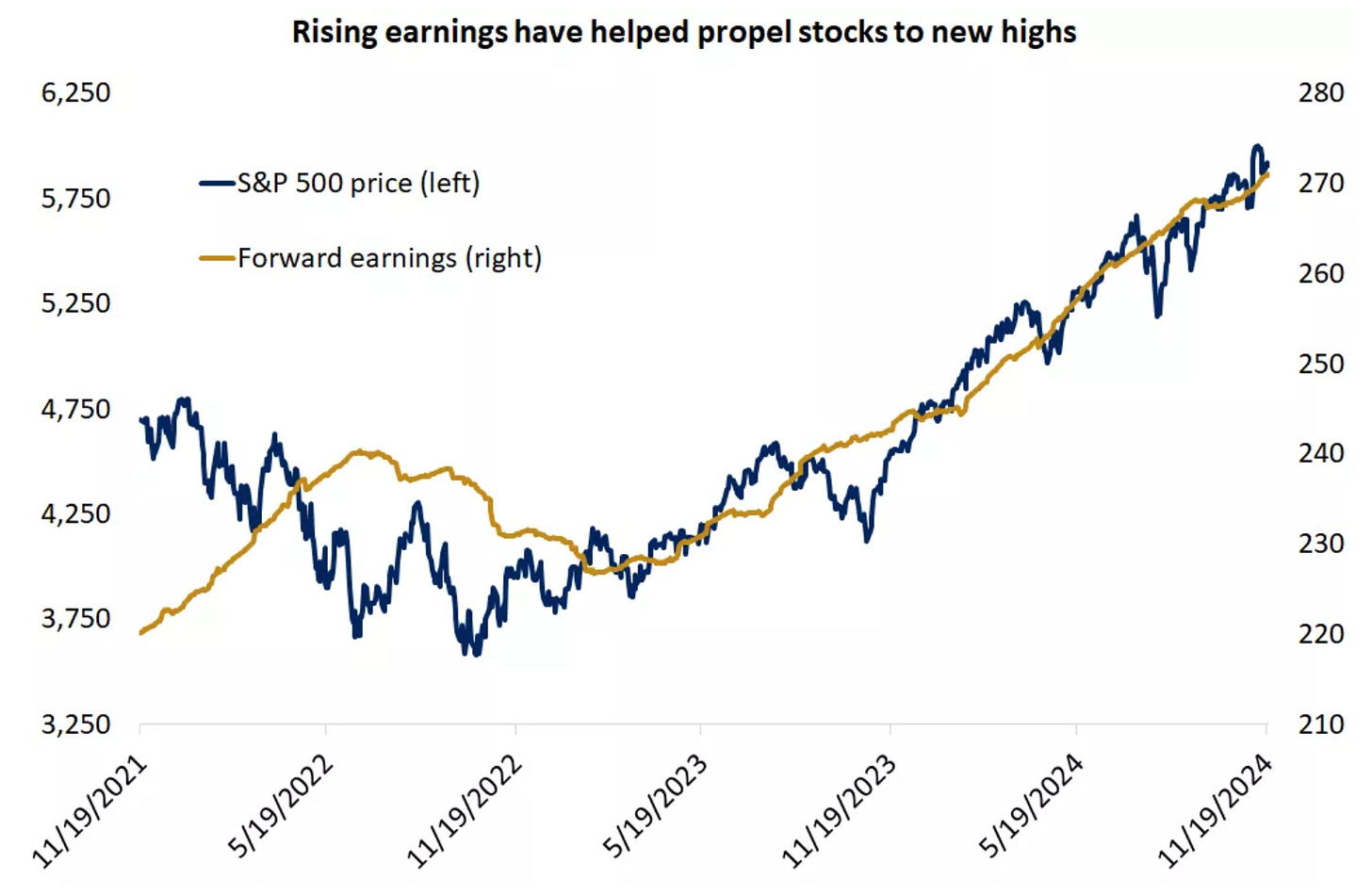
NVIDIA’s earnings effectively mark the end of the Q3 2024 earnings season in the U.S. We’ve been discussing companies from our universe both through the chat and every Sunday in the Portfolio Management section. We will continue uploading individual reports now that the pace of earnings has slowed (though in December, we have Good Times Restaurants, Catana, … coming up).